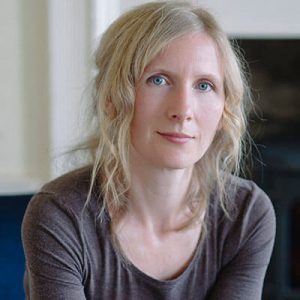


The Correspondent, Virginia Evans

Isn’t there something wonderful in that, to think that the story of one’s life is preserved in some way, that this very letter may one day mean something, even if it is a very small thing, to someone.

When we chose an epistolatory novel (winner of Women’s Prize for Fiction) as this month’s Book Club novel, I’m afraid I sighed. But I needn’t have worried. The Correspondent by Virginia Evans 2025 proved to be a very rewarding read and the group absolutely loved it.

The letter writer, Sybil Van Antwerp, is a woman in her ‘70s, divorced and living alone in near the river in Annapolis: now retired, she once had a prestigious career in law. Every Monday, Wednesday and Friday she neatly stacks her special writing paper (ordered from England), assembles her fountain pen and writing materials and writes letters – to her brother Felix; her son and daughter; her best friend Rosalie; the unhappy gifted son of an ex -colleague – she will write to anyone, including authors she admires. These letters are punctuated by a continuing unsent letter the recipient of which is only revealed at the end.

Through the letters we gradually learn about Sybil’s life and the griefs and regrets she is coming to terms with – the death of her son Gilbert aged 8; a court case she bitterly regrets and the desertion by her birth mother when she was 14 months old. We learn about the rift between her and her husband, the uneasy relationship with her daughter, but also the warm humorous correspondence with Rosalie, looking back on happy school days together, comparing authors they like and extending sympathy with one another.

She is often acerbic, is known to be stubborn and can be unreasonable. On the other hand, she is witty and enjoys a good laugh as well as being warm and kind, reaching out to help others but finding it difficult to do so with her own daughter. She is also coping with the shadow of impending blindness – a tragedy for a woman who cherishes her independence and whose main pleasure in life is reading and writing.

In the unsent letters she reveals her raw feelings; other letters express her anger at her children when they suggest a retirement apartment, Happy Haven, and when they buy her a DNA testing kit for Christmas.  Despite her opposition to the idea, she ‘accidentally’ ticks a box to discover her birth family.

This is a novel of heartache and sorrow, but also humour and love, and even romance. Through her letters Sybil is ultimately able to come to terms with guilt and loss and put right things she feels she has done wrong.

The novel is reminiscent of Elizabeth Strout’s My Name is Lucy Barton as the truth is gradually revealed and things left unsaid are as important as what is said. Many of us enjoyed it so much that we read it twice and it resonated with us on many different levels. We strongly recommend it and hope you enjoy it as much as we did.

Next month’s book is The Things We Never Say by Elizabeth Strout

Look What You Made Me Do, John Lancherser

‘Anger is more fun than grief. And revenge is better still’.

Some of enjoyed John Lancherser’s novel Capital (2012) and its BBC Adaptation, so we were keen to read his latest novel Look What You Made Me Do (2026). It is shorter and focused on the two main characters Kate and Phoebe, with first-person narration from each in turn interspersed with extracts from Phoebe’s TV script. It is a revenge story, sharply satirical with the theme of the relationship between entitled baby boomers versus bitter millennials.

Kate is in her 60s, happily married to Jack, an architect, living in the stylish house he has designed for them. They are childless, affluent and self-satisfied and Lanchester makes fun of their middle-class North London way of life – pretentious dinner parties, good works and even Kate’s book club (get the book discussion out of the way and then enjoy a good gossip). Then Jack suddenly dies and everything changes.

Phoebe on the other hand, is in her 20s, a script writer with a misery of a complaining mother and, as she admits, not a very nice person. She has recently completed the script for a TV series Cheating about a couple having an illicit affair in the style of a fly-on-the-wall documentary. It has exploded into an enormous success which everyone is talking about, but when Kate sees it she is horrified that it closely echoes what has gone on in her own marriage and she surmises that Jack must have been having an affair so that her seemingly happy marriage was a sham.

The novel then centres on the conflict between the two women (no spoilers) and its devastating conclusion. As such it is a thriller, but it is also a dark satire with implications of the dangers of technology for the future of all of us.  Lanchester’s strength lies in his keen ear for dialogue and pretension – such as the dinner party based on ‘60s recipes which they all enthuse over or when Phoebe takes her mother out to dinner, steeling herself for all the inevitable complaints and it turns out to be a taster menu. There is a contrast between Kate’s carefree University years when she’s an adept shoplifter and able to steal Jack from his girlfriend, and Phoebe’s hard work to support herself and break free from the ties of her mother.

We all enjoyed the book despite its implausible coincidences and the fact that we were reading about two very unpleasant people. It was well written – an easy enjoyable read albeit with dark overtones.

Our next book is The Correspondent by Virginia Evans

Book Club, Latest Reveiw – Fly Wild Swans, My Mother, Myself and China

‘Life and death are like sunrise and sunset.’ Jung Chang

Members had previously enjoyed Jung Chang’s first book, Wild Swans (1991), the gripping account of the lives of three generations of women in her family, moving from the horrors of foot binding to their experiences of the Cultural Revolution. Fly Wild Swans, My Mother, Myself and China is a continuation of her story and a more reflective account of how she herself moved from indoctrination to intellectual freedom. 

It opens with her family’s experiences at the hands the Revolutionary Guards. Even though her parents were committed communists and Party loyalists, they suffered with imprisonment and torture, and her father never recovered. We learn how children in school were brainwashed, sometimes turning against their own parents, and she herself was a fervent young revolutionary.  

Continue reading “Book Club, Latest Reveiw – Fly Wild Swans, My Mother, Myself and China”

The Pantomime is Back!

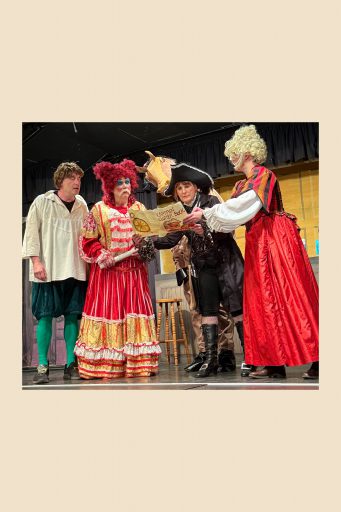
After a break of a few years, the famous Hadlow Down Variety & Drama Club Pantomime is returning to the Village Hall — and we’re delighted to welcome it back!

This year’s production is “Dick Turpin”, promising a thoroughly entertaining evening in the grand tradition of panto. Expect plenty of laughs, a fabulous pantomime Dame… and keep an eye out for the pantomime horse!

Dandy highwayman Dick Turpin travels to York pursued by the villainous Judge Mental and his Bow Street Runners, Hand and Cuff.
In York he meets and falls in love with Maggie Micklegate of the Cock and Bull Inn, run by Doris Doolittle and her son Simon.

When Dick reveals he holds a pirate’s treasure map and offers to make them all rich, the adventure truly begins…
Will Judge Mental capture our hero, or will Dick escape once again?

Continue reading “The Pantomime is Back!”

Panto Read Through

The Hadlow Down Drama & Variety Club are delighted to announce that the HDDVC will be performing a pantomime on the 13th and 14th March, 2026.
Julie Twigg will be directing the panto we have selected, which is Dick Turpin. We felt this panto would be a bit different, and is not one that we have performed before.
On the 3rd December at 7.00pm, in the Village Hall, we will be holding a ‘read through’ evening; an opportunity, for those interested in joining the cast, to get a flavour of the panto prior to casting.
We always welcome new members and hope that you will feel you can join the cast, help backstage or support front of house.

The Hadlow Down Summer Show – Conditions, Rules, Hints & Entry Forms

The Hadlow Down Summer Show – Conditions, Rules, Hints & Entry Forms

                          Hadlow Down Summer Show

                                                          CONDITIONS

  1. All classes in the schedule are open to all persons to exhibit on the payment of 30p per entry.
  2. Entry forms and fees to be handed in BEFORE THURSDAY 6PM JULY 31ST
  3. Entries will NOT be accepted after this date
  4. All fruits, flowers and vegetables, except decorative classes must have been grown in the exhibitor’s own ground.
  5. Only one exhibit per class may be entered by any one exhibitor.
  6. Exhibitors shall, upon request, allow members of the show organisers to visit the place where their exhibits were grown.
  7. All jams and other preserves in the Domestic section, must have labels clearly stating the contents and date of making.
  8. Exhibits to be brought to the hall between 8.30am and 10.00am on show morning. Judging begins at 10.00am.
  9. Judges have the power to withhold any prizes where the subject of the competition is considered unworthy or where there are insufficient entries.
  10. Any exhibit not according to the schedule will be disqualified.
  11. The Show organisers do not accept responsibility for any loss or damage to any exhibit.
  12. PRIZE GIVING 3.30pm. No exhibits to be removed before 4pm.
  13. This year, for the first time, we will be auctioning exhibits that have been donated after the show. Exhibitors who do not wish for their exhibits to be sold in aid of Hadlow Down Summer Show, should remove them between 4.00pm and 4.20pm. The donated exhibits will be auctioned at 4.20pm.

Continue reading “The Hadlow Down Summer Show – Conditions, Rules, Hints & Entry Forms”

Orbital, by Samantha Harvey

Raw space is a panther, feral and primal.

The 2024 Man Booker Prize went by unanimous decision to Orbital by Samantha Harvey. At 136 pages it is one of the shortest ever Booker prize-winners. It is an unusual book, fiction but not a conventional novel as it has only a very rudimentary plot. It follows six fictional astronauts over twenty-four hours on an orbiting international space station. The astronauts, from America, Russia, Italy, the UK and Japan are there to do vital work. Their days keep to a rigid pattern: preparing dehydrated meals, following a strict exercise routine to prevent muscle atrophy,  monitoring the effects of zero gravity on the mice, routine repairs and maintenance and occasional space walks.

As they travel at speeds of over 17.000 miles per hour, they watch their silent blue planet, circling it sixteen times in a single day, spinning past continents and passing through seasons, taking in the beauty of mountains, glaciers and seas. Although separated from their world, they cannot escape its pull as news comes from home bringing thoughts of their eventual return. They watch a typhoon, marvelling at its magnificence but fearful of the destruction it brings. They become increasingly aware of the fragility of human life – so far from Earth, they have never felt more part of it. It has been described as ‘mesmerising, ethereal and tender’, a beautifully written mediation on human aspirations and limitations.

Some of us had to get used to the lack of plot and character development and would agree with the Guardian reviewer that’ ‘thrilled reports of light effects start to fall a little flat’. Nevertheless, we found it enjoyable and worthwhile while the rhythms of the writing made it a compelling read.

Our next book is Strange Sally Diamond by Liz Nugent.

Heather Mines