The Book Club

Are you an avid reader? Or perhaps new to the village. Did you know we have a flourishing Book Club?

The book club started about 15 years ago with just 3 members and our first novel was ‘the Girl With a Pearl Earring’. Since then we have grown into a small but enthusiastic group of committed readers. We meet monthly in different members houses for book discussion and a bit of gossip over a glass of wine. Books are chosen democratically: someone suggests a book which we may vote on. We aim to read widely — modern literary books, some classics and, occasionally, a thriller or a biography. We want to enjoy our reading but sometimes to challenge ourselves and read something we may otherwise not have thought of.To find out more about the Village Book Club contact Heather.
Activity Address Rose Cottage and various venues
Name of Contact Heather Mines
Contact Address Rose Cottage, Hall Lane, Hadlow Down, TN22 4HJ
Telephone 07974 204231
Email Address heathermines2@hotmail.com

The Correspondent, Virginia Evans

Isn’t there something wonderful in that, to think that the story of one’s life is preserved in some way, that this very letter may one day mean something, even if it is a very small thing, to someone.

When we chose an epistolatory novel (winner of Women’s Prize for Fiction) as this month’s Book Club novel, I’m afraid I sighed. But I needn’t have worried. The Correspondent by Virginia Evans 2025 proved to be a very rewarding read and the group absolutely loved it.

The letter writer, Sybil Van Antwerp, is a woman in her ‘70s, divorced and living alone in near the river in Annapolis: now retired, she once had a prestigious career in law. Every Monday, Wednesday and Friday she neatly stacks her special writing paper (ordered from England), assembles her fountain pen and writing materials and writes letters – to her brother Felix; her son and daughter; her best friend Rosalie; the unhappy gifted son of an ex -colleague – she will write to anyone, including authors she admires. These letters are punctuated by a continuing unsent letter the recipient of which is only revealed at the end.

Through the letters we gradually learn about Sybil’s life and the griefs and regrets she is coming to terms with – the death of her son Gilbert aged 8; a court case she bitterly regrets and the desertion by her birth mother when she was 14 months old. We learn about the rift between her and her husband, the uneasy relationship with her daughter, but also the warm humorous correspondence with Rosalie, looking back on happy school days together, comparing authors they like and extending sympathy with one another.

She is often acerbic, is known to be stubborn and can be unreasonable. On the other hand, she is witty and enjoys a good laugh as well as being warm and kind, reaching out to help others but finding it difficult to do so with her own daughter. She is also coping with the shadow of impending blindness – a tragedy for a woman who cherishes her independence and whose main pleasure in life is reading and writing.

In the unsent letters she reveals her raw feelings; other letters express her anger at her children when they suggest a retirement apartment, Happy Haven, and when they buy her a DNA testing kit for Christmas.  Despite her opposition to the idea, she ‘accidentally’ ticks a box to discover her birth family.

This is a novel of heartache and sorrow, but also humour and love, and even romance. Through her letters Sybil is ultimately able to come to terms with guilt and loss and put right things she feels she has done wrong.

The novel is reminiscent of Elizabeth Strout’s My Name is Lucy Barton as the truth is gradually revealed and things left unsaid are as important as what is said. Many of us enjoyed it so much that we read it twice and it resonated with us on many different levels. We strongly recommend it and hope you enjoy it as much as we did.

Next month’s book is The Things We Never Say by Elizabeth Strout

Look What You Made Me Do, John Lancherser

‘Anger is more fun than grief. And revenge is better still’.

Some of enjoyed John Lancherser’s novel Capital (2012) and its BBC Adaptation, so we were keen to read his latest novel Look What You Made Me Do (2026). It is shorter and focused on the two main characters Kate and Phoebe, with first-person narration from each in turn interspersed with extracts from Phoebe’s TV script. It is a revenge story, sharply satirical with the theme of the relationship between entitled baby boomers versus bitter millennials.

Kate is in her 60s, happily married to Jack, an architect, living in the stylish house he has designed for them. They are childless, affluent and self-satisfied and Lanchester makes fun of their middle-class North London way of life – pretentious dinner parties, good works and even Kate’s book club (get the book discussion out of the way and then enjoy a good gossip). Then Jack suddenly dies and everything changes.

Phoebe on the other hand, is in her 20s, a script writer with a misery of a complaining mother and, as she admits, not a very nice person. She has recently completed the script for a TV series Cheating about a couple having an illicit affair in the style of a fly-on-the-wall documentary. It has exploded into an enormous success which everyone is talking about, but when Kate sees it she is horrified that it closely echoes what has gone on in her own marriage and she surmises that Jack must have been having an affair so that her seemingly happy marriage was a sham.

The novel then centres on the conflict between the two women (no spoilers) and its devastating conclusion. As such it is a thriller, but it is also a dark satire with implications of the dangers of technology for the future of all of us.  Lanchester’s strength lies in his keen ear for dialogue and pretension – such as the dinner party based on ‘60s recipes which they all enthuse over or when Phoebe takes her mother out to dinner, steeling herself for all the inevitable complaints and it turns out to be a taster menu. There is a contrast between Kate’s carefree University years when she’s an adept shoplifter and able to steal Jack from his girlfriend, and Phoebe’s hard work to support herself and break free from the ties of her mother.

We all enjoyed the book despite its implausible coincidences and the fact that we were reading about two very unpleasant people. It was well written – an easy enjoyable read albeit with dark overtones.

Our next book is The Correspondent by Virginia Evans

Book Club, Latest Reveiw – Fly Wild Swans, My Mother, Myself and China

‘Life and death are like sunrise and sunset.’ Jung Chang

Members had previously enjoyed Jung Chang’s first book, Wild Swans (1991), the gripping account of the lives of three generations of women in her family, moving from the horrors of foot binding to their experiences of the Cultural Revolution. Fly Wild Swans, My Mother, Myself and China is a continuation of her story and a more reflective account of how she herself moved from indoctrination to intellectual freedom. 

It opens with her family’s experiences at the hands the Revolutionary Guards. Even though her parents were committed communists and Party loyalists, they suffered with imprisonment and torture, and her father never recovered. We learn how children in school were brainwashed, sometimes turning against their own parents, and she herself was a fervent young revolutionary.  

Continue reading “Book Club, Latest Reveiw – Fly Wild Swans, My Mother, Myself and China”

Orbital, by Samantha Harvey

Raw space is a panther, feral and primal.

The 2024 Man Booker Prize went by unanimous decision to Orbital by Samantha Harvey. At 136 pages it is one of the shortest ever Booker prize-winners. It is an unusual book, fiction but not a conventional novel as it has only a very rudimentary plot. It follows six fictional astronauts over twenty-four hours on an orbiting international space station. The astronauts, from America, Russia, Italy, the UK and Japan are there to do vital work. Their days keep to a rigid pattern: preparing dehydrated meals, following a strict exercise routine to prevent muscle atrophy,  monitoring the effects of zero gravity on the mice, routine repairs and maintenance and occasional space walks.

As they travel at speeds of over 17.000 miles per hour, they watch their silent blue planet, circling it sixteen times in a single day, spinning past continents and passing through seasons, taking in the beauty of mountains, glaciers and seas. Although separated from their world, they cannot escape its pull as news comes from home bringing thoughts of their eventual return. They watch a typhoon, marvelling at its magnificence but fearful of the destruction it brings. They become increasingly aware of the fragility of human life – so far from Earth, they have never felt more part of it. It has been described as ‘mesmerising, ethereal and tender’, a beautifully written mediation on human aspirations and limitations.

Some of us had to get used to the lack of plot and character development and would agree with the Guardian reviewer that’ ‘thrilled reports of light effects start to fall a little flat’. Nevertheless, we found it enjoyable and worthwhile while the rhythms of the writing made it a compelling read.

Our next book is Strange Sally Diamond by Liz Nugent.

Heather Mines

Foreign Affairs, by Alison Lurie

‘How much nicer and less boring it would be if we were all still children.’

Our book this month was Alison Lurie’s Foreign Affairs (1984), winner of the 1985 Pulitzer Prize for Fiction, also described as a perfect literary rom com.

Lurie herself was an academic at Cornell University. Like Vinnie Miner, her main character, she was a specialist in children’s literature and folk lore. In the early 1980’s she attended London University Institute of Education on a Fellowship and Foreign Affairs was a result of that time.

The novel is about two American academics who also came to London on a Foundation Grant to further their research. Vinnie, the main character of the novel is researching children’s playground rhymes and Fred Turner is writing a PhD on John Gay. Vinnie is plain and middle-aged and, although academically successful, suffers from self-doubt and self-pity which pursues her in the form of an imaginary dog called Fido.

Fred on the other hand is young and extremely handsome, an up and coming academic suffering from a rift in his marriage. Both characters become involved in romantic attachments. Vinnie with Chuck, a brash Texan engineer, who to her dismay is sat next to her on the flight to England.

Initially Chuck is everything that Vinnie despises about Americans, from his naivety, his lack of education, his wide hat and fringed jacket, and, above all, his plastic raincoat. However, as their paths in London cross and she comes to know him better, she is drawn to his generous spirit and surprising sensitivity and insight and they become lovers.

Vinnie herself is just the opposite – a confirmed Anglophile, staying in a tasteful Notting Hill flat. Now resigned to a single life, she has ordered things as she likes them. Perhaps not totally likeable, a bit of a kleptomaniac at moments of stress or unhappiness, taken for granted by others who think that as a single woman she is always available to help them. Chuck is her first experience who sees beyond the waspish exterior and loves for herself.

The novel is full of humour, in fact book club members described it as great fun and hilarious. I particularly liked the scene in which Vinnie first encounters Chuck sitting next to her on the plane and to keep him from disturbing her she gives him Little Lord Fauntleroy to read and to her surprise he finishes it.

It is not hard to detect the influence of Henry James – there are references to him and the novel echoes James’s own theme of the naïve American encountering the more sophisticated and duplicitous European. Fred’s actress lover is such a character, although there is a twist In this story.  We enjoyed the novel – the scenes of London in the 80’s, the humour as well as the sadness. We recommend it,

Next month: Confession With Blue Horses by Sophie Hardac
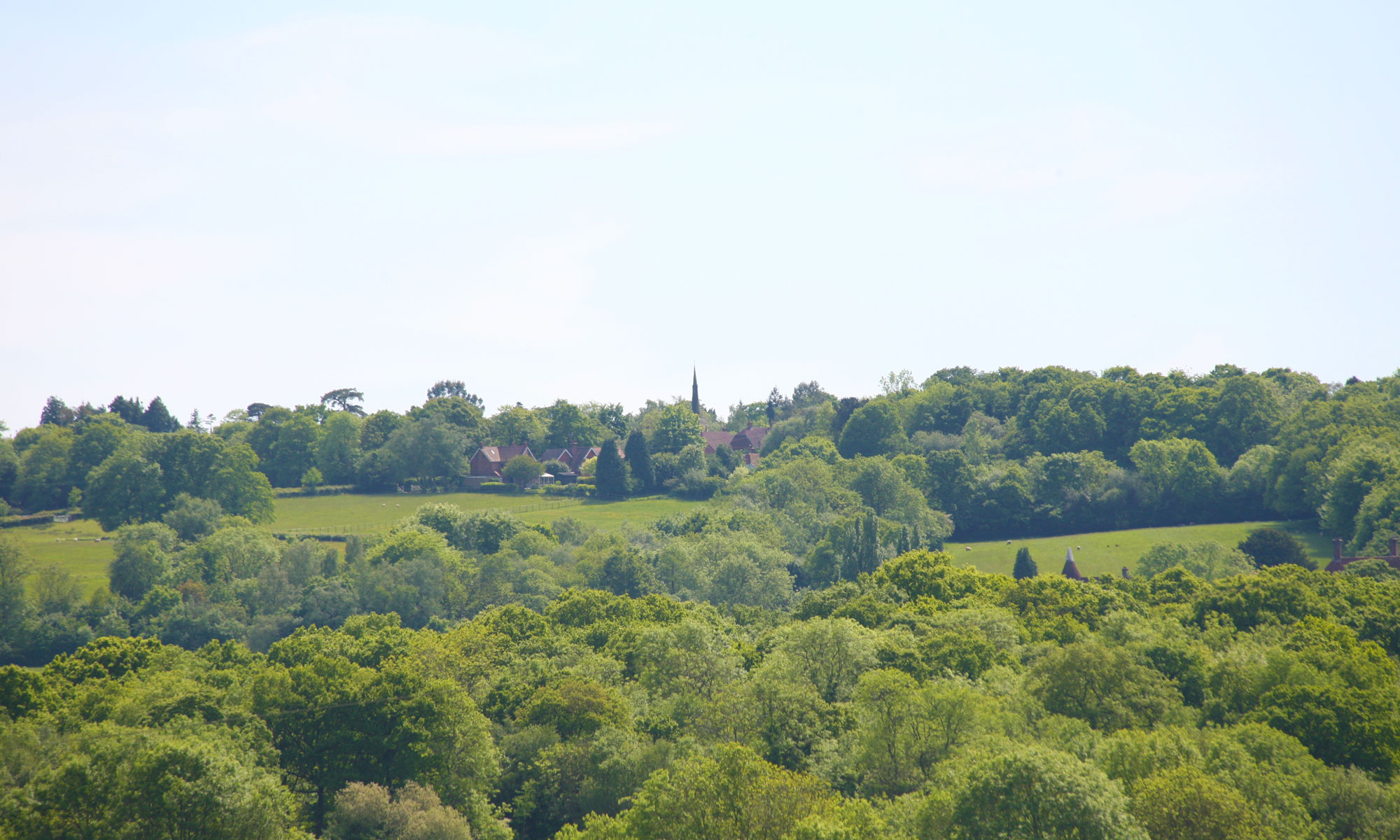
French Hats in Iran by Heydar Radjavi

“ ‘They have removed our hats’, an Iranian way of saying ‘we have been cheated’

 ‘They have put hats on our heads’, another Iranian way of saying, we have been cheated’”.

 We have been reading French Hats in Iran (2011) by Heydar Radjavi, a mathematician of some repute born in 1935 and now living in Canada with his Canadian wife. He has always had a   love of literature although he is best known for his work on obscure mathematical subjects. However, he also loved to tell stories about his early life in Tobriz until he lived until he went to university, and his wife and children urged him to publish them, and this collection of mini tales is the result.

Each story can be read independently but together they build up a picture of everyday life in Iran in the ‘30s and ‘40s – a time of tension between the traditionalists and the Shah’s attempts to modernise.

The French hats (Frangi) symbolise this conflict. The Shah forbade both men and women to cover their heads and had policemen on motor scooters to enforce this. They were, however, allowed to wear the modern French hats although most women preferred to stay indoors rather than expose their faces. The theme of hats and head coverings runs through many of the stories.

Radjavi has brought his childhood vividly to life with all the humour and contradictions of growing up in a strict traditionalist family. His elderly father ran his household according to unbending religious precepts, but his resourceful mother and her friends found ways to enjoy such forbidden frivolities as music and dancing and to eat sweetmeats and engage in gossip and laughter together. There is humour in the way the fundamentalists tied themselves up in knots over religious rules – is a woman’s wig ahead covering, or not? for instance. Do animals depicted in art have souls?

One of the most shocking tales is the first one, in which his nine-year-old playmate is married (illegally) and had to leave her own family to live in seclusion with her groom’s family. She cried passionately for her pet cat which her strict father-in-law would not allow because he considered it unclean. The marriage however turned out to be a happy one with a gradual relaxation of rules after her father-in-law’s death until here granddaughters are able to go to university and wear Western clothes.

These are stories of a largely happy childhood in which he and his friends are inventive in finding ways to subvert the rules and enjoy themselves. Forbidden to go to the movies, they discover how to make their own film show much appreciated by their mother and the other women. It is a rich and loving enorinmen. The tone is light-hearted and humorous and sheds light on what is happening in Iran today. It can be dipped in and out of and is easy and pleasant to read.


Hadlow Down Book Club reviews Confessions with Blue Horses

‘They have built a new stone wall right through Berlin.’

This month we read Confessions with Blue Horses (2020), shortlisted for the Costa Book Award written by Sophie Hardach. It was a book we all enjoyed very much. Born a decade before reunification, Hardach grew up near Frankfurt in West Germany, but her novel focuses on an East German family. Continue reading “Hadlow Down Book Club reviews Confessions with Blue Horses”

Book Club Review – September

‘Jewish is a way of seeing the world, a strong consistent background theme.’

Our book this month is Going Home by Tom Lamont 2024. It is set in the Jewish community in Enfield and centres on Joel, an articulate two-year-old whose mother dies leaving him in the care of her friend Teo. It is about the four adults who take on responsibility for him in their own way. Teo who has moved away from the community to a job in the police force and a flat in Aldgate is the responsible one who takes on the grieving youngster and  learns to care for him and love him. Then there is Ben, the feckless rich boy, the opposite of Teo but also his best friend, and Vic, Teo’s father, dying of a degenerative condition and determined that Joel will not grow up in the care of the Social Services as he once did. Finally, Sybil, the only woman of the four and a progressive rabbi trying in vain to reform the intransigent members of her synagogue. All of them interact with Joel in their own way and find their lives challenged and enriched by him Continue reading “Book Club Review – September”

Hadlow Down Book Club August Review


A kid is a terrible thing to be, in charge of nothing’ 

Recently we read the childhood of David Copperfield and then compared it to Demon Copperhead, Barbara Kingsolver’s novel inspired by her hero Dickens but set in the rust belt of Appalachia and exploring contemporary issues. It was a co-recipient of the 2023 Pulitzer Prize for fiction and winner of the 2023 Women’s Prize for Fiction. Like Dckens, she lays bare and makes an impassioned criticism of social injustice, cruelty and incompetence of those who should be helping children,  Continue reading “Hadlow Down Book Club August Review”

July Hadlow Down Book Club Review

‘English humour turns on transforming the ordinary into the extraordinary’ , James Thurber 

Listening to the World Service in the small hours of an insomniac night, I suddenly jolted wide awake as I heard the voice of the author of one of our favourite Book Club reads – Clare Chambers talking about Small Pleasures. She was saying that she extensively read fifties novels in order to capture the dialogue and atmosphere of the time. Her favourite was Excellent Women (1952) by Barbara Pym, so we decided to read it ourselves.   Continue reading “July Hadlow Down Book Club Review”